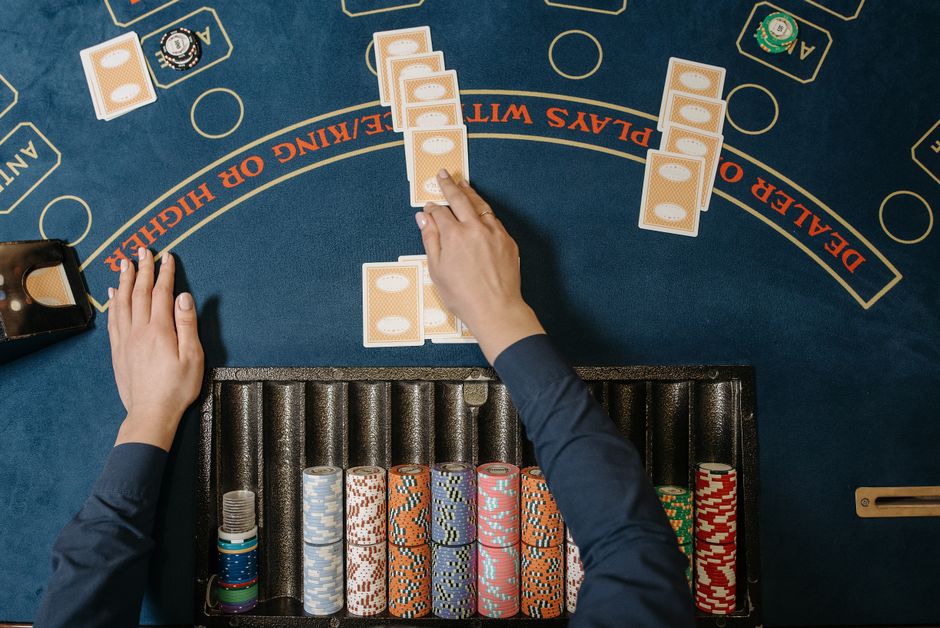
You sit down at a virtual poker table. The flop comes down, and you've got top pair with a decent kicker. But your opponent just shoved all-in. Do you call? If you're a seasoned player, you're already calculating pot odds, reading their timing, and recalling how they played the last three hands. If you're a slots-only player, you might as well be flipping a coin. That's the beautiful, brutal truth of iGaming: not all games are created equal. Some are pure luck, others are a chess match disguised as cards. And if you don't know which is which, you're bleeding money.
The Great Divide: Chance vs. Skill
Let's cut through the marketing fluff. The iGaming world splits into two fundamental categories: games of chance and games of skill. Slots? Pure chance. The RNG (random number generator) doesn't care about your strategy, your mood, or how long you've been losing. It's a cold, mathematical beast. Poker? Mostly skill. Yes, you get dealt bad cards, but over thousands of hands, the better player wins. Blackjack sits somewhere in the middle—basic strategy reduces the house edge to under 1%, but you can't overcome the math without card counting, which gets you banned faster than you can say "Vegas."
Why does this matter? Because your bankroll management, your expectations, and your entire approach should shift depending on what you're playing. If you treat slots like poker, you'll chase losses. If you treat poker like slots, you'll blame luck for your own bad calls. Know the difference.
Slots: The Art of Accepting Variance
Slots are the casino's cash cow for a reason. They're simple, flashy, and require zero brainpower. But that doesn't mean you can't play smart. Here's what the slots crowd gets wrong: they think "due for a win" is a thing. It's not. Every spin is independent. A machine that hasn't paid out in 500 spins is no more likely to hit than one that just paid out. That's the gambler's fallacy, and it's expensive.
So what can you do? Focus on volatility and RTP (return to player). High-volatility slots like Bonanza or Money Train can go hundreds of spins without a decent win, then explode. Low-volatility slots like Starburst pay small but often. Neither is better—they just suit different bankrolls and temperaments. And always check the RTP. A 96% RTP slot loses you $4 for every $100 wagered, on average. A 92% slot loses $8. Over a session, that difference is a meal. Or a night out.
- Set a loss limit before you spin. Not after. Before.
- Ignore "hot" and "cold" machines. They don't exist.
- Use free play to test volatility. If you hate waiting 200 spins for a bonus, drop the high-volatility games.
Poker: Where the Real Edge Lives
Poker is the only game in the casino where you play against other people, not the house. That's your edge. The rake takes a cut, sure, but if you're better than your opponents, you profit. That's not true for slots or roulette. Ever. Some of the clearest guidance on this comes from dana slot.
But here's the trap: online poker is harder than it looks. The days of drunk tourists punting off stacks are mostly gone. Today, you're up against grinders with HUDs (heads-up displays) tracking every stat. If you're not studying ranges, bet sizing, and pot odds, you're the fish. I've seen countless players jump into $1/$2 No-Limit Hold'em because they watched a few YouTube videos, only to lose buy-in after buy-in. They blame the deck. The deck didn't call a 3-bet with 7-2 offsuit.
Want to actually win? Start with micro-stakes. Learn position. Play tight-aggressive. And for the love of everything holy, don't bluff a calling station. That's not skill—that's ego.
A Quick Word on Betting Markets
Sports betting sits in its own category. If you're betting on a coin flip, it's chance. If you're betting on a sport you've studied for years, it's skill. The line moves because of information, injuries, weather, public sentiment. Sharp bettors exploit soft lines. Square bettors bet their favorite team. Which one are you? If you can't answer that honestly, stick to small stakes until you can. And please, stop parlay-ing every Sunday. That's a lottery ticket, not a strategy.
Bankroll Management: The Unsexy Superpower
Here's a truth that separates winners from degenerates: you can be the best poker player in the world and still go broke if you don't manage your money. The same goes for slots and betting. Your bankroll is your ammunition. Treat it like it's the last you'll ever have.
- Separate your gambling bankroll from your life savings. Obvious, but people still mix them.
- For poker, never buy in for more than 5% of your bankroll. That means a $500 bankroll plays $25 buy-ins. Not $200.
- For slots, set a session limit and stick to it. If you hit it, stop. The machine will still be there tomorrow.
- For sports betting, use flat stakes. 1-2% of your bankroll per bet. No chasing.
I've watched a guy turn $200 into $5,000 on a slot bonus, then lose it all in 20 minutes because he couldn't walk away. That's not bad luck. That's bad discipline. The games are designed to keep you playing. Your job is to leave when you're ahead—or at least when you're not dead.
The Takeaway: Play the Player, Not the Game
Here's the thing nobody tells you: iGaming isn't about beating the casino. It's about beating yourself. Your impulses, your tilt, your false beliefs about luck. Slots are entertainment, not a retirement plan. Poker is a skill game, but only if you put in the work. Sports betting is an information market, and if you're not the sharpest one in it, you're the product.
So before you fire up that next session, ask yourself: am I playing to win, or am I playing to feel something? Both are fine—but only one of them will leave you with money in your account tomorrow. Choose wisely. And if you ever find yourself yelling at a slot machine for "being rigged," take a breath. It's not rigged. It's just math. And math doesn't care about your feelings.