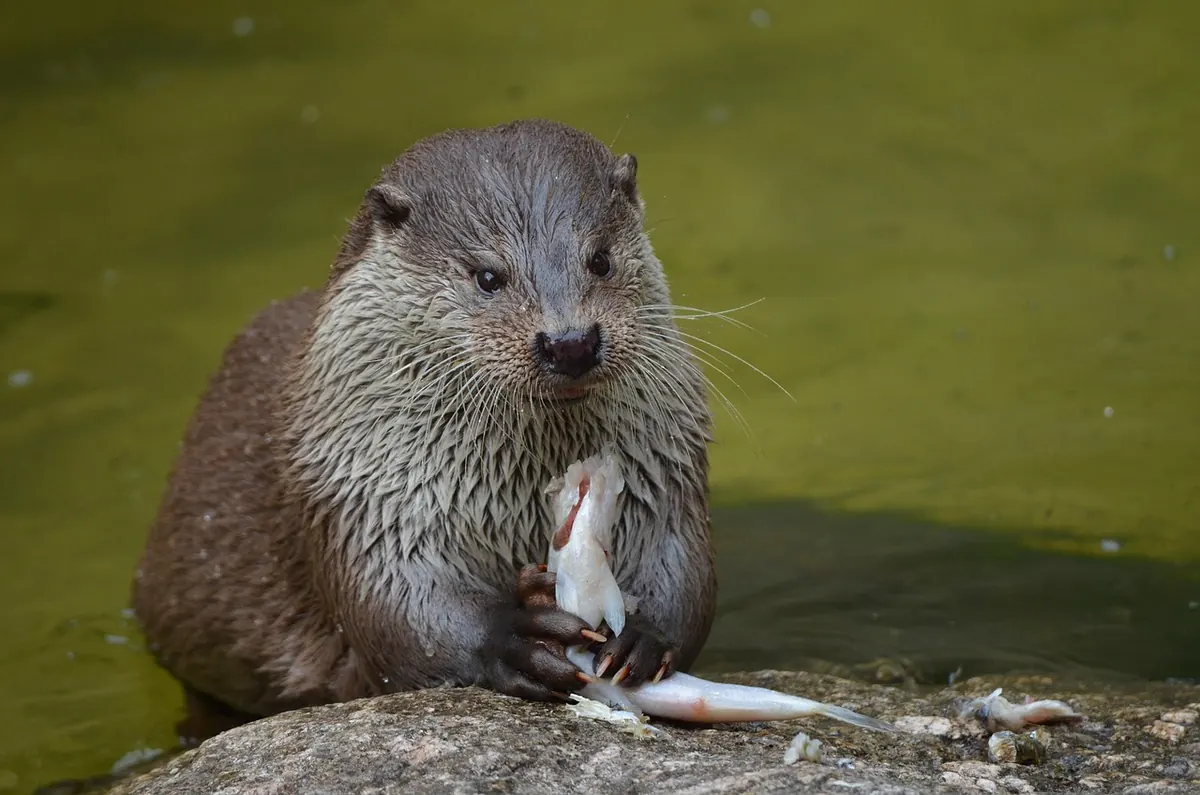
Three brown mammals, one muddy riverbank, and about four seconds of a disappearing tail. That is how most encounters go. Otters, water voles and American mink share the same lowland rivers, ditches, canals and reedbeds, and a brief sighting can leave you guessing. The reassuring part is that you rarely need a clear view. Each animal leaves a signature behind, and a flat stone or a grazed patch of bank will often tell you more than a glimpse ever could.
Start With Habitat, Then Doubt It
Otters are the travellers. One animal may cover many kilometres of river in a night, and will happily use lakes, reservoirs, estuaries and coast as well as the main channel. Look for them on larger waters with plenty of fish and quiet daytime resting places.
Water voles are the homebodies. They need soft banks to burrow into, slow or gently flowing water, and lush vegetation within a few metres of the entrance. Ditches, small streams and grazing marsh suit them best. A bank poached by livestock or mown to the waterline rarely holds them.
American mink are the opportunists. They use almost any water with cover nearby, from a town-centre canal to a coastal inlet, and they are more active in daylight than people expect.
Habitat narrows the list, but all three can turn up on the same stretch. Take the next step and look at what has been left behind.
Otter Signs: Spraint, Slides and Large Prints
Learn one thing about otters and make it spraint. It is left in conspicuous places — a flat-topped stone midstream, a bridge ledge, a tussock of grass, a log — and it is dark, tarry and packed with fish bones, scales and crayfish fragments. Fresh spraint carries a strong, sweet-musky smell that many people find oddly pleasant, somewhere between hay and jasmine tea. It often looks as though it was placed deliberately, because it was.
Slides are the second giveaway. On a muddy or grassy bank you may find a smoothed, well-worn chute, sometimes several metres long, often with claw marks leading into it. Otters use these for quick access to the water.
Prints are large for a British mammal — up to about 9 cm across — with five toes, usually webbed, set around a broad pad. Where an otter has walked, prints often fall in a loose group of three or four, because it bounds rather than walks. Holts are usually well hidden: under a root plate, in a rock pile or in a cavity in the bank.
Water Vole Signs: Grazed Lawns and Angled Cuts
A water vole bank looks tidy. The giveaway is a series of burrow entrances along a few metres of bank, with at least one opening at or just below the waterline. Around the entrances, voles graze the vegetation down short, creating a neat lawn.
Droppings are small, blunt-ended and greenish-brown, about the size of a grain of rice, often left in little piles at favoured spots. Feeding stations are the other classic sign: stems and leaves cut at a distinctive angled slice rather than bitten off squarely. Piles of cut stems collect on a flat stone or ledge.
They also make a loud, sharp plop when they drop into the water, and are often heard long before they are seen.
American Mink Signs: Twisted Scat and Flattened Runs
Mink scat is dark, twisted and tapered, often with visible fur, feathers or bone, and is frequently left on a prominent stone or log. Unlike otter spraint, it tends to smell unpleasant rather than sweet.
Mink tracks show five toes with clear claws and a rounder pad, generally about 3–5 cm across, and often appear in pairs because mink bound as they move. Along the water's edge, look for flattened, tunnel-like runs pushed through tall vegetation. Mink follow the same routes repeatedly, and a run can look as though something has been dragged through the grass.
On sight, mink are slim and sinuous, dark chocolate-brown to almost black, sometimes with a small white chin patch. They swim high in the water with a visible bow wave and a long tail trailing behind.
When You Only Get a Glimpse
In the Water
- Otter: broad snout, head and back sitting low, thick tail trailing like a rudder. Dives with a rolling, unhurried motion and often barely splashes.
- Water vole: small and rounded, blunt nose, ears barely visible. Swims with the head up and the back level with the surface, and usually heads straight for cover.
- Mink: slim and snake-like, small pointed head, back clearly above the surface, bushy tail behind. Moves quickly and often vanishes without a sound.
On the Bank
Otters bound, leaving groups of prints, and will sometimes slide or roll on grass and mud. Water voles move in short, low dashes, stopping to nibble, and look front-heavy, with a rounded rump and a short tail. Mink move fast and low with a sinuous bounding gait and rarely linger in the open.
Field Signs at a Glance
- Otter: black tarry spraint packed with fish bones on a raised stone; smoothed slides; large webbed five-toed prints; concealed holts.
- Water vole: bank burrows with grazed lawns; small blunt droppings in piles; stems cut at an angle; a loud plop.
- American mink: dark twisted scat with fur or feathers; smaller clawed prints in pairs; flattened runs through vegetation; a bow wave when swimming.
Making the Record Count
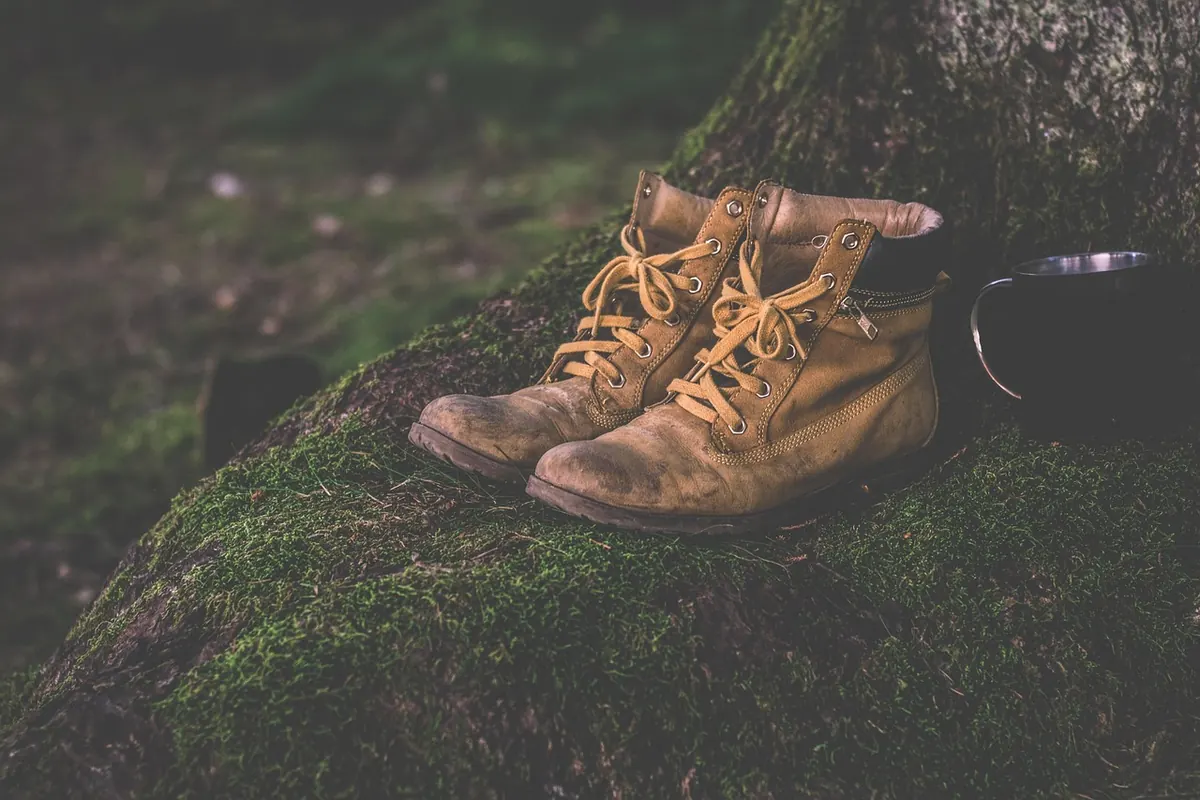
If you find a sign you cannot place, photograph it with something for scale — a coin, a boot, a hand — and note the date and a grid reference if you have one.
- Photograph the sign, the surrounding bank and anything that gives scale.
- Note the date, the weather and a grid reference or nearest landmark.
- Keep your distance: never dig into a burrow or a holt, and keep dogs out of the water where banks are riddled with entrances.
- Wash your hands after handling anything, and leave signs exactly where you found them.
- Send records to your local environmental records centre or wildlife trust. Mink sightings are worth reporting in particular, as they are non-native and a serious pressure on water voles.
Water voles get misidentified in the other direction too: a brown rodent slipping into a bank is far more often a rat. Check the blunt nose and the short tail before deciding. A little patience at the same spot, at the same time of day, usually settles it.
Photo: Huskyherz / Pixabay